

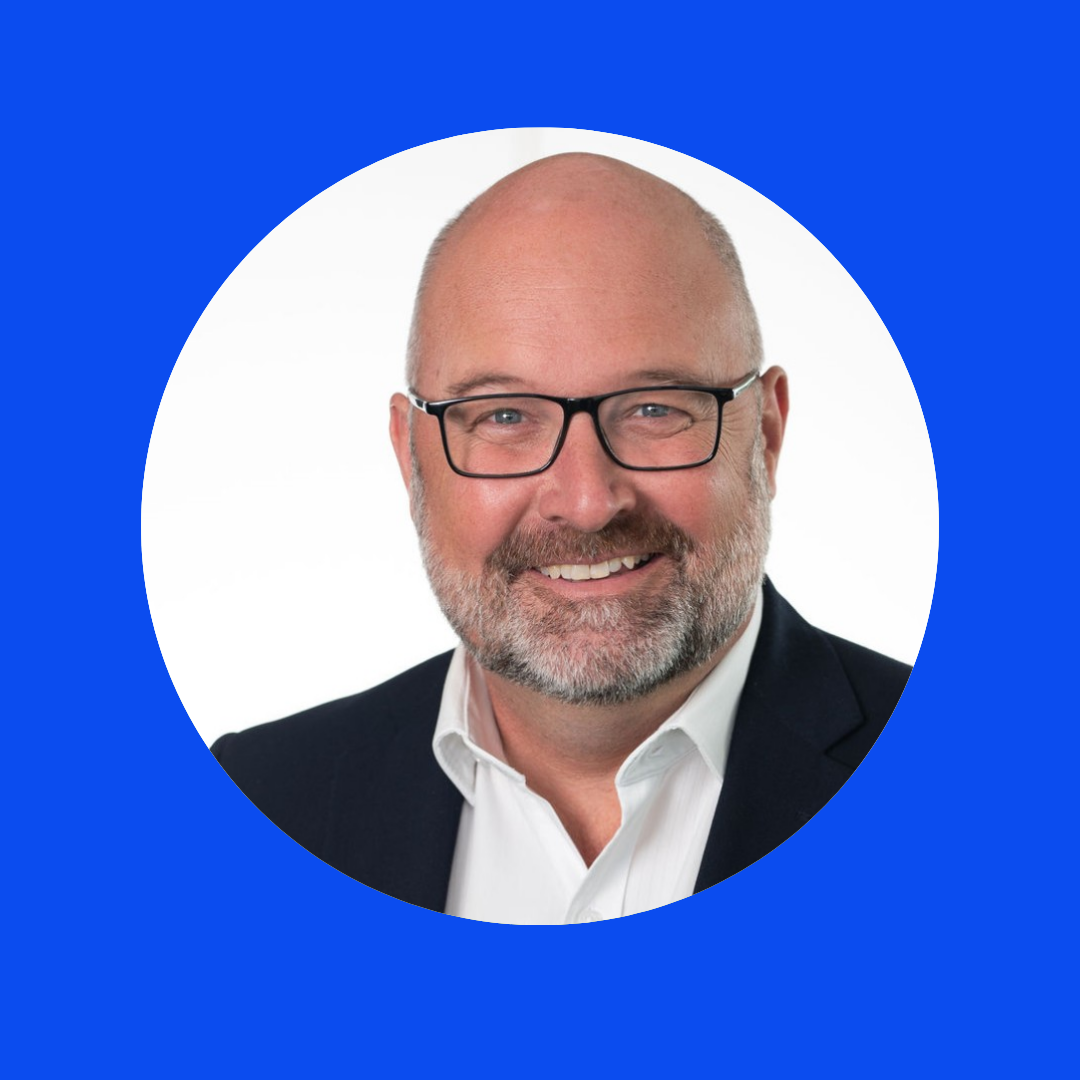
Fractional Expert Brisbane, Australia
Drew- Fractional COO | CRO - Manufacturing & B2B Growth
At Maestro, we know there’s more to life than work. In fact, it’s the experiences, relationships and pursuits we have outside of work that can often give us an edge in what we do each day. We are kicking off an interview series called “Meet the Maestro” where we interview our Maestros and get an insight to who they really are and what makes them tick - beyond the CV.
With over 30 years of international manufacturing and operations leadership across Australia and the UK, Drew has built a reputation for turning strategic ideas into profitable realities. He combines strategic foresight with hands-on operational execution, helping growing businesses build the systems and confidence to scale sustainably.
Drew’s superpower lies in pattern recognition: honed through decades of leading transformations across dozens of industries and markets. Whether it’s uncovering a risky assumption before a $300K investment misstep or identifying the bottleneck limiting a company’s growth, he sees what others miss and designs systematic, practical solutions that work. Having helped build a manufacturing operation from concept to $1.8M in revenue within 12 months, Drew understands the excitement, and the pressure, that come with major growth opportunities.
Drew doesn’t believe in theory or glossy decks; he embeds with teams, implements systems, and leaves businesses stronger and more capable long after he’s gone. He’s best known for helping manufacturing, construction, and industrial companies ready to scale, or leaders facing high-stakes operational change. For Drew, success isn’t just about ideas, it’s about execution, results, and building businesses that last.
1. Tell us about a career highlight to date…
My career highlight has been creating FBS Consulting to solve the two biggest challenges facing growing businesses: validating opportunities before costly investment and building scalable systems for execution - leveraging three decades of operational leadership across UK and Australian markets.
2. When you were little, what did you want to be when you grew up?
When I was little, I wanted to be a professional classical musician - and for many years, I was. I started playing string instruments before I was three years old, trained intensively throughout my childhood, performed with symphony orchestras, and built a career in music before transitioning into business. The unusual choice wasn't becoming a musician - it was leaving that world to pursue manufacturing and business leadership in my late twenties. People thought I was crazy walking away from decades of classical training, but the skills transferred more than anyone expected. As a principal double bass player, you're managing multiple critical tasks simultaneously - reading the music, watching the conductor, monitoring your section, following the lead cellist, listening for cues, and tracking any soloists. Beyond that, orchestral performance is pure teamwork: 80+ players executing different parts simultaneously, all working to create something that sounds unified and exceptional. Those skills became the foundation for leading cross-functional teams and conducting business transformations - the ability to monitor multiple moving parts, respond to changing dynamics, and coordinate diverse functions toward a single outcome. I still play principal double bass with Northern Rivers Symphony Orchestra - music never left me, it just evolved from career to passion while informing everything I do in business.
3. What are your passions outside of work and how do you make time for them?
Family comes first - my wife and two kids are everything to me. After relocating from the UK to Australia, we've been on this adventure together, and nothing beats the time we spend exploring our new home (though I'm still working on getting them to embrace camping!).
Music remains a core passion - I play principal double bass with Northern Rivers Symphony Orchestra, which requires regular rehearsals and performances. It's non-negotiable time that keeps me grounded and connects me to the discipline and teamwork that shaped my early life. I also surf (badly) with my youngest daughter, which is pure joy and forced presence - you can't think about business strategy when you're reading waves. I make time for these passions by being ruthlessly protective of family and music commitments. They're scheduled into my calendar the same way client meetings are, because they're equally important to who I am. Working as a fractional executive actually enables this - the flexibility of the model means I can structure my work around what matters most while still delivering exceptional results for clients. It's about integration rather than balance - bringing my whole self to both work and life.
4. If you could instantly master any skill or hobby, what would it be and why?
Languages, without question. Having worked across Europe for decades, I witnessed the normality of people of all ages speaking multiple languages fluently - it's simply expected there. I can speak some basic European languages, but I'd love to master them at a level where I could conduct business in the local dialect with complete confidence. There's something powerful about negotiating a deal, resolving a conflict, or building team culture in someone's native language - you connect at a deeper level and pick up nuances that get lost in translation. Given my work now bridges Australian and international markets, particularly helping manufacturers expand across cultures, this skill would be transformative. Language mastery isn't just about words - it's about truly understanding how different cultures think, communicate, and do business. That cultural intelligence, delivered through fluent language capability, would make me significantly more effective at what I do: helping companies successfully navigate the complexities of international growth.
5. What’s a personal value or belief that guides the way you live your life?
I believe wisdom and great ideas can come from anyone, regardless of their title or position. Some of the best operational solutions I've implemented came from conversations with warehouse staff, apprentices, or junior team members who see problems from the front line that executives miss from their offices. This belief shapes everything - I make a point of talking to people at all levels of an organization when I'm working with clients, because the person doing the job often knows more about how to improve it than anyone else. It's not just about being democratic or inclusive, it's about being smart. Hierarchies create blind spots, and the best leaders actively work to eliminate them. This approach has led to breakthrough solutions countless times - whether it was a production line worker identifying a bottleneck that was costing £50K annually, or a customer service rep spotting a revenue opportunity senior leadership had overlooked. I've learned to listen first, ask questions, and never assume that seniority equals insight. The moment you start believing your title makes you the smartest person in the room is the moment you stop learning - and stop being effective.
6. What’s a challenge you’ve overcome outside of work that shaped you?
Moving back to Australia after nearly 30 years in the UK was one of the most challenging decisions I've faced. My wife and I had built our entire adult lives there - careers, friendships, community connections, and raised our four children who knew nothing but British life. The decision meant leaving established professional networks, uprooting teenagers who were devastated to leave their friends, and starting over in a country that had changed dramatically since I'd left. What shaped me most was navigating the uncertainty while keeping the family united. There were months of doubt - had we made the right call? My kids struggled with the transition, professional opportunities weren't immediately clear, and the cultural readjustment was harder than expected. But working through that challenge taught me resilience in a completely different context than business. It reinforced that calculated risks are worth taking even when the path isn't clear, that family commitment matters more than comfort, and that starting over isn't failure - it's courage. That experience directly influences how I work with clients facing major transitions or international expansion. I understand firsthand the human cost of big moves, the complexity of cross-cultural challenges, and the resilience required to rebuild in unfamiliar territory. It made me a better advisor because I've lived the uncertainty I now help businesses navigate.
7. What do you think your job will look like in 10 years time?
In 10 years, I see fractional leadership becoming the standard model for strategic expertise rather than the exception. Businesses will routinely build teams that combine core full-time staff with fractional executives who provide specialized, high-impact leadership for defined periods or specific challenges. My role will likely evolve from being a solo practitioner to potentially leading a network of fractional specialists - creating opportunities for other experienced leaders to work in this model while maintaining the quality and ethics that define how I operate. The work itself will become more complex and international. As Australian and global markets become increasingly interconnected, companies will need leaders who can bridge cultures, understand diverse regulatory environments, and implement systems that work across borders. My three decades of cross-cultural experience positions me perfectly for that evolution. Technology will enable more sophisticated remote leadership, but the fundamentals won't change - businesses will still need strategic thinking combined with hands-on execution, rigorous analysis before investment, and systematic approaches to scaling operations. The delivery methods might evolve, but the core value I provide - turning strategic ideas into profitable operational realities while preventing costly mistakes - will remain as relevant in 10 years as it is today.
8. If you could travel anywhere in the world tomorrow, where would you go and what would you do?
I've been very lucky - I've traveled extensively for both work and personal adventures, experiencing diverse cultures and places across Europe, Africa, Asia, and beyond. At this stage of life, if I could go anywhere tomorrow, it would be somewhere relaxing with my family. Maybe a quiet island off the Australian coast or a secluded spot in New Zealand where we could disconnect completely - no agendas, no schedules, just time together. After years of ambitious travel and constant movement, I've learned that the destination matters less than who you're with and whether you're truly present. My kids are getting older, and those windows for family time are narrowing. So rather than chasing exotic locations or adventure travel, I'd choose anywhere that allows us to slow down, enjoy each other's company, and create memories without the pressure of ticking off tourist attractions. That might sound unambitious compared to climbing Kilimanjaro or exploring Antarctica, but it reflects what I value most now - quality time with the people who matter, in a place where we can all genuinely relax. The adventure isn't always in the destination; sometimes it's in the conversations you have and the connections you strengthen when you finally stop moving.
9. What does success look like to you?
Success in life starts with providing for my family - ensuring they have security, opportunities, and knowing I'm fully present for what matters most. If my kids grow into confident, ethical adults who feel loved and supported, that's the ultimate measure of personal success. In work, success means seeing the companies I partner with achieve breakthrough growth they couldn't reach alone. When a client scales from £3.6M to £8.3M, or builds a $2.4M startup from zero, or generates millions in new pipeline - that's not just business success, it's families and communities benefiting from sustainable growth. But there's a crucial qualifier: success only counts if it's done ethically and sustainably. Helping a business grow by cutting corners, exploiting people, or damaging the environment isn't success - it's just profit, and profit alone is empty. True success is creating lasting value that extends beyond immediate results. Whether that's raising children who contribute positively to the world, or building businesses that thrive long after my involvement while treating people well and operating responsibly. Success is about the ripple effect - the positive impact that continues expanding outward long after the initial work is done.
Related Articles
Empowering the workforce of the future.



Join the Future
Unlock Your Potential
Discover how Maestro connects you with opportunities that match your skills and aspirations.