
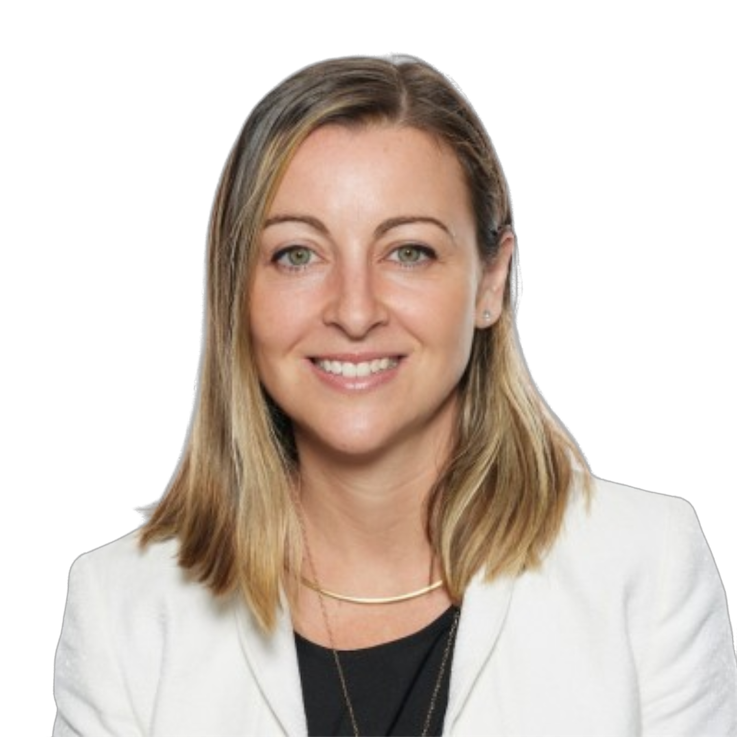

Fractional Expert & Interim Executive Sydney, Australia
Sarah - Fractional Design Leader, Coach & Facilitator
At Maestro, we know there’s more to life than work. In fact, it’s the experiences, relationships and pursuits we have outside of work that can often give us an edge in what we do each day. We host an interview series called “Meet the Maestro” where we interview our Maestros and get an insight to who they really are and what makes them tick - beyond the CV.
Sarah has spent more than 20 years leading product design teams across entertainment, finance, property and tech, helping organisations scale teams, embed new ways of working and build genuinely collaborative operating rhythms across product, engineering and strategy. Most recently at Atlassian, she led Core Design Services including Support and Community, and previously scaled design at Domain Property Group after more than a decade at Westpac in experience and design leadership roles.
Her strength lies in seeing patterns across complex systems and knowing exactly where to focus attention to unlock better team performance. She specialises in helping design managers and leaders shape strategy for major initiatives, particularly where alignment, clarity and execution are breaking down.
Sarah’s superpower is bringing people together to find a way forward. Whether through workshops, design sprints or journey mapping, she creates momentum where there was friction, often with a healthy dose of humour along the way.
Alongside her leadership work, she is a trained coach with a Master’s in Business Coaching, a regular international speaker and a long-time mentor to design leaders. More recently, she has been exploring how AI can be integrated into organisations in a deliberate, human-centred way to support sustainable performance and better ways of working.
1. Tell us about a career highlight to date…
Launching at scale and exceeding outcomes is always the goal. Two highlights stand out: first, the updated Domain property app, which was twice named "App of the Day" on the App Store. Second, launching the Atlassian Community platform. We brought four disparate platforms together into a unified experience for customers, driving MAU and engagement well beyond expectations.
Otherwise a big highlight has been getting over / accepting fear of public speaking and presenting at conferences on topics I am interested about (that are usually in the zeitgeist)
2. Talk us through an unusual career choice you’ve made…
I "blagged" my way into web design in the late 90s. Unusual (bold) because I had little related experience. I told the CEO I could single-handedly build his company website in three months. He gave me the chance, and I did it. The company owned ten West End theatres, including the London Palladium—a fascinating jump from the stage to the World Wide Web. I backed up the "blag" with a Masters in Interactive Multimedia, and that unconventional start led to a career spanning every form of experience design that followed, from UI to organisational.
3. When you were little, what did you want to be when you grew up?
As one of six kids, I occasionally wished I were an only child! Joking aside, I wanted to be a writer. I was a complete bookworm and was given an old typewriter when I was seven. I loved the tactile nature of creating stories—my imagination is the creative trait that hasn’t left me.
4. What are your passions outside of work and how do you make time for them?
I am a lifelong learner. I’m currently balancing three courses across communication, leadership, and coaching (which might be over-ambitious, but I’m intrinsically motivated!). I completed a masters in business coaching in my mid 40s part time. My next thing is improv.
I play the piano in the evenings to decompress. Beyond that, I’m a serial gig-goer. I need live music at least twice a month—Grace Jones at the Opera House has been the standout highlight this year.
5. If you could instantly master any skill or hobby, what would it be and why?
Flying a helicopter. I love the perspective of a bird’s-eye view. Since I’m unlikely to find the time to learn it the traditional way, having that instant mastery of the mechanics and the view would be incredible.
6. What’s a personal value or belief that guides the way you live your life?
Service. I want us all to go about our days with ease. I notice when this isn’t happening. In the real world, that looks like helping lost tourists I encounter in Sydney. In the workplace, it means looking for opportunities outside of my job description. For example, noticing a lack of horizontal networking for leaders, I piloted Coaching Circles across three geographic regions so leaders could share, learn, and support each other.
7. What’s a challenge you’ve overcome outside of work that shaped you?
A few years ago, I had to return to the UK within 48 hours as my father’s health suddenly declined, leaving my husband, young son, and a large design team behind.
Because I lead as a coach, I had trust and existing structures in place for my managers to be autonomous. (one of the benefits of not micro-managing), I was able to focus on my UK family, knowing my team supported each other.
That experience reinforced that we are human first. Allowing myself to rely on others, something I wasn't naturally great at emotionally, opened my heart to supporting others through grief and deepened connections with those around me.
8. What do you think your job will look like in 10 years time?
Digital products will still exist, and they will still require leadership. While the "what" and "how" will shift significantly, the core need to solve human problems that create business value will remain. My hope is that we move toward technology designed to support humanity and the planet, rather than the other way around. My role will be to ensure that human needs remain at the centre of that evolution.
9. If you could travel anywhere in the world tomorrow, where would you go?
If time travel were on the table, I’d go to the Orkney Islands 5,000 years ago. Having visited a few years ago, I want to understand what life was like in Neolithic times, pre-history.
I’m fascinated by the senses they must have used that have since been blunted by the convenience of GPS and smartphones. My hypothesis is that our modern senses are a shadow of what they once were, traded for the ability to process information overload.
10. What does success look like to you?
Success at work is the magic that occurs when cross-craft diversity of thought aligns to create value for both the customer and the business. Where everyone plays to their strengths with mutual respect. These moments are clearer in retrospect, awareness to appreciate that high-functioning momentum while it’s happening - this a reminder to appreciate when things are going well at the moment.
Meet More of Our Recent Maestros
Meet Chor-mui from Singapore
Meet Arjun from Singapore
Meet Carolyn from Melbourne, VIC
Author
Related Articles
Empowering the workforce of the future.



Join the Future
Reimagine how fractional experts drive value for organisations
Discover how Maestro connects organisations with highly experienced experts and reimagines the future of work for talent.