
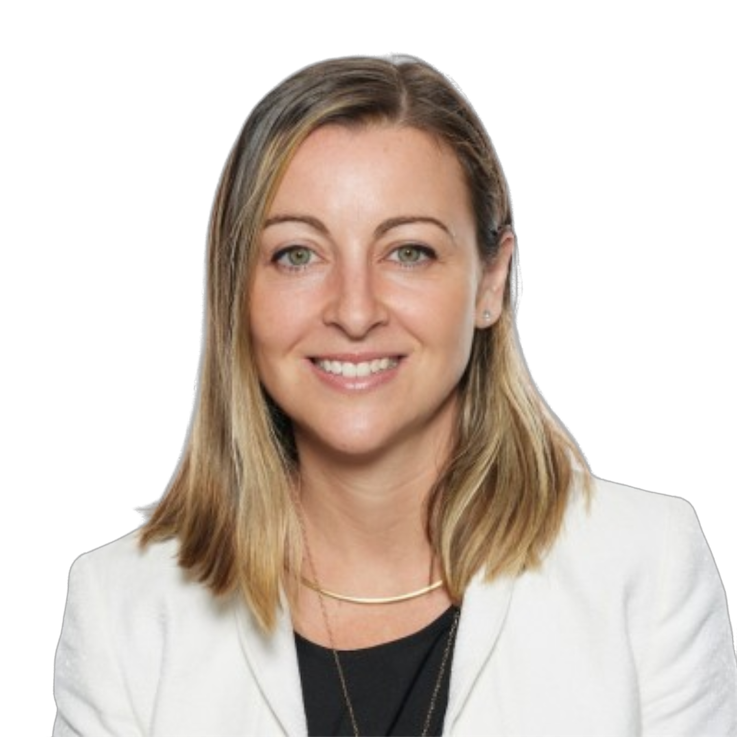

Fractional Expert Melbourne, Australia
Simon - Fractional CTO/CIO & Technology Executive Advisor: Healthcare, Digital Transformation, Cyber & AI
At Maestro, we know there’s more to life than work. In fact, it’s the experiences, relationships and pursuits we have outside of work that can often give us an edge in what we do each day. We host an interview series called “Meet the Maestro” where we interview our Maestros and get an insight to who they really are and what makes them tick - beyond the CV.
Simon sits at the intersection of technology leadership, engineering reality and board-level governance, helping organisations close the gap between strategic intent and what actually gets built. Over 20+ years across health, defence, utilities and SaaS, he has worked as a CTO, CIO, founder and Non-Executive Director, giving him a rare ability to see both the boardroom priorities and the engineering detail that delivers them.
What he consistently saw is a structural blind spot in most technology businesses: engineering is the largest cost line, yet one of the least financially transparent. That disconnect between effort, spend and outcomes is what he is now focused on solving. His superpower is “bilingual fluency” across disciplines, allowing him to translate between boards, engineers and commercial teams and align them into one coherent direction that bridges strategy and execution.
1. Tell us about a career highlight to date…
Serving as a Non-Executive Director and Chair of the Finance, Audit and Risk Committee at Ballarat Health Services during the $464.6 million Base Hospital rebuild. I went from being someone who built and ran technology to someone responsible for governing it from the other side of the table, overseeing one of Victoria's largest health infrastructure programs and the technology transformations behind it. Watching that hospital open and knowing I'd played a small part in making it real, in a community that genuinely needed it, was the moment I understood that good governance isn't paperwork. It's the thing that makes ambitious projects survive contact with reality.
2. Talk us through an unusual career choice you’ve made along the way…
I started my technical career as an Electronics Technician in the Royal Australian Navy. Most people in the corporate tech world came up through uni and consulting firms. I came up through a maintenance bay on a warship. It taught me something most career paths can't, which is that a system is only as good as the person willing to take it apart at 2am to find the fault. I've carried that mindset into every executive role since. The seniority changes the language, but the discipline of actually understanding the thing you're responsible for never goes out of fashion.
3. When you were little, what did you want to be when you grew up?
Growing up I didn't have a specific job or profession in mind. I just knew I liked to create things, build things, and understand why things worked the way they did. So I figured I'd be happy with anything that let me keep doing that. As I got a bit older, I added a third condition: whatever it was had to help people as well. Looking back, every job I've actually enjoyed has been some combination of those three things, so I suppose the kid was right.
4. What are your passions outside of work and how do you make time for them?
I'm fortunate that what I like to do outside of work, while not the same as work, points in the same direction. Learning, discovering new things, and trying to leave the world a bit better than I found it. Over the years that's looked like volunteering with the Australian Volunteer Coast Guard, picking up new technologies for the sake of it (not because a project demanded it), and most recently training in Brazilian Jiu-Jitsu, which has been as much about mental discipline and humility as physical health. Making time for it is partly habit, partly the recognition that the executives I admire most are the ones whose lives are bigger than their job descriptions.
5. If you could instantly master any skill or hobby, what would it be and why?
If I could suddenly understand how something looks and feels from someone else's point of view, I'd take that in a heartbeat. So many of the problems, disagreements and fights I see, both professional and personal, start with a misunderstanding or get stuck on one. And our usual ways of communicating, my own included, just aren't built to bridge that gap. I reckon life would be a lot richer and a lot happier, if we all had a few less misunderstandings.
6. What’s a personal value or belief that guides the way you live your life?
That curiosity is a discipline, not a personality trait. The temptation in any senior role is to start trading curiosity for confidence, to perform expertise rather than keep learning. I've watched too many capable people calcify that way. So I make a habit of putting myself in rooms where I'm not the expert, taking on questions I can't answer immediately, and treating "I don't know" as the start of the conversation rather than the end of it. It's the reason I went back to uni for my Master's in IT in 2018, after twenty years of already working in the field.
7. What’s a challenge you’ve overcome outside of work that shaped you?
There have been plenty over the years. Aspects of my childhood that weren't ideal, plenty of challenges during my time in the military, and the usual run of curveballs since. The thread I see across all of them is that meeting challenges consistently, and coming out the other side a better version of yourself, takes a combination of fortitude and preparedness. Not that you always beat the challenge. My failures have taught me a lot more than my successes, and I reckon how a person gets back up says more about them than how high they stand when things are easy.
8. What do you think your job will look like in 10 years time?
The role of the technology executive will look pretty different. Today the job is largely about translating between business intent and technical execution, making the engineering visible to the executive and the executive priorities visible to the engineering. In ten years AI will close most of that translation gap. The orchestration of work itself will be easier; the work that's left will be harder. The executive's job will compress into the things AI can't do, which is deciding what's worth building, taking responsibility for the consequences, and holding the trust of the people, customers and communities the technology serves. We'll probably be fewer in number, but the bar for judgement will be much higher. I reckon it's an exciting time to be in this seat.
9. If you could travel anywhere in the world tomorrow, where would you go and what would you do?
Plenty of places on the list. The Western Front in Europe, to walk the ground I've spent years reading about. South Africa to track down some long-lost relatives. The wilderness of Botswana for the experience of being properly small in a big landscape. Japan for the culture and the people, which I've always found fascinating from a distance. And a working trip to Antarctica, for the close camaraderie and isolation that I reckon would feel more familiar than foreign after my Navy years. I'm not too fussy about which one. If the opportunity came up for any of them, I'd take it.
10. What does success look like to you?
Success is the moment something I helped build keeps working after I've stepped away from it. The technology, the team, the governance, whatever it is. It's not really yours until it can run without you. In an industry that loves to talk about disruption and transformation, I reckon the underrated achievement is durability. Things that still work, still serve people, still hold up under scrutiny five and ten years on. That's the standard I try to hold myself to. The rest, the titles and dollars and recognition, is mostly a lagging indicator.
Meet More of Our Recent Maestros
Meet Finn from Melbourne, Australia
Meet Sarah from Sydney, Australia
Meet Chor-mui from Singapore
Author
Related Articles
Empowering the workforce of the future.




Join the Future
Reimagine how fractional experts drive value for organisations
Discover how Maestro connects organisations with highly experienced experts and reimagines the future of work for talent.