
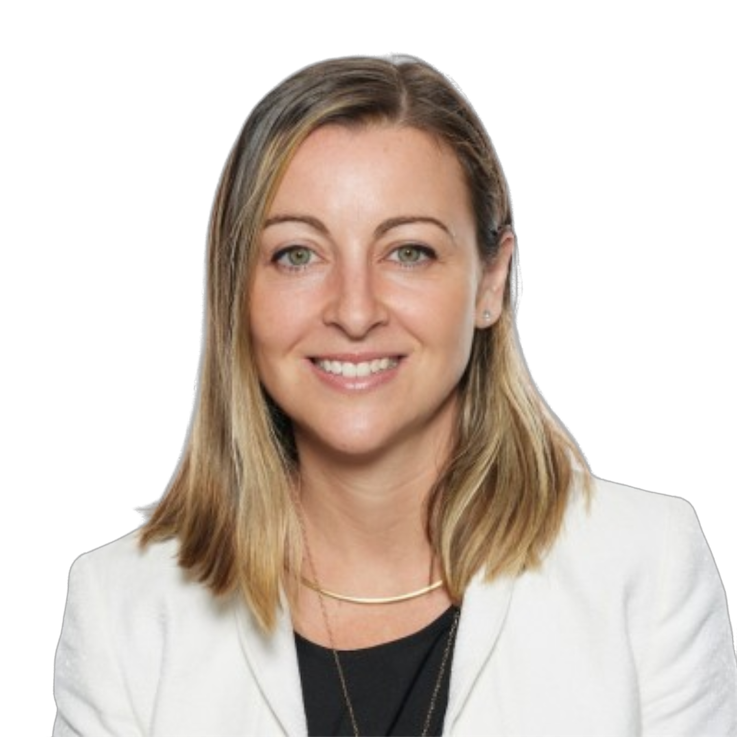

Fractional Expert Melbourne, Australia
Jeannette - Fractional Chief People Officer or People Change Leader
At Maestro, we know there’s more to life than work. In fact, it’s the experiences, relationships and pursuits we have outside of work that can often give us an edge in what we do each day. We host an interview series called “Meet the Maestro” where we interview our Maestros and get an insight to who they really are and what makes them tick - beyond the CV.
If there's one thing businesses don't need more of, it's consultants who understand the org chart but miss the people underneath it… or people-people who can't read a P&L. Jeanette is neither. She's the rare kind of operator who holds both at once.
With a career spanning executive People & Culture leadership, large-scale transformation, and strategic advisory across a range of industries, Jeanette has been in the room when organisations are at their most stretched (restructures, culture overhauls, leadership failures, growth spurts) and she's the person leaders turn to when they need to move from foggy to focused, fast. She's led the big changes, built leadership capability from the ground up, and helped businesses navigate the messy middle that no playbook quite covers.
What sets Jeanette apart isn't just her experience, it's her instinct. She reads people dynamics and commercial realities simultaneously, connecting patterns others miss and asking the questions that quietly unlock everything. Her superpower? Commercial sharpness wrapped in genuine curiosity about human behaviour. She doesn't just diagnose, she helps leaders make practical, grounded decisions that actually land.
1. Tell us about a career highlight to date
One of the highlights of my career has been the diversity and scale of experiences I’ve had throughout my career and the opportunity to work in very different environments during periods of significant growth, transformation, and change.
For example, I moved from working in a high-growth global Infrastructure and services company into the Royal Children’s Hospital as a change leader during one of the most significant organisational transitions in its history. The role involved leading across eight concurrent change streams, including changes to the way people worked, organisational restructuring, the major operational and logistical challenges involved in the hospital move, rebuilding support functions, and later bringing previously outsourced services back in-house.
I genuinely enjoy walking into complex situations, understanding what is really happening beneath the surface, and helping leaders and businesses move forward with more clarity and confidence. I’m energised by growth, transformation, problem-solving, and the variety that comes from working with different industries, leadership styles, and business challenges. I think that constant exposure to new environments has shaped the way I think and kept me highly adaptable throughout my career.
2. Talk us through an unusual career choice you’ve made along the way.
One of the more unusual career decisions I made was stepping out of a traditional executive HR pathway to join HR Partners by Randstad (global ASX) part time as an Executive General Manager while also running my own consulting business.
What made it unusual was that recruitment/consulting had never really been my core background. My career had been built predominantly across executive HR leadership, transformation, organisational change, and strategic advisory work, so from the outside it probably looked like quite a different move.
But I made the decision very deliberately. I wanted broader commercial exposure beyond internal HR leadership, particularly around running a P&L, strengthening my network, facilitation and presenting, relationship building, and working more directly with business leaders across different industries. I also wanted to broaden my exposure to senior business leaders and deepen my understanding of the commercial and leadership challenges organisations were navigating in real time.
What I loved about the role was that it wasn’t just HR consulting. It involved partnering closely with clients, brainstorming business and leadership challenges, understanding market trends, and helping organisations think through growth, capability, and organisational issues in real time.
It gave me a much broader commercial lens and strengthened my ability to operate as a trusted adviser rather than purely a functional HR leader. Looking back, it was one of the experiences that most shaped the way I work today.
3. When you were little, what did you want to be when you grew up?
When I was little, I changed my mind constantly about what I wanted to be. We moved around quite a bit when I was growing up (in country and to different countries), and I think that exposed me to new environments, cultures, different people, and new ways of thinking very early on.
At various stages I wanted to be an artist and work in a creative field, then an academic, then a psychologist, then a doctor, and at one point I was completely convinced I wanted to become a criminal investigator or criminal lawyer. I ended up doing human resources, neuroscience-based coaching and counselling in my education.
Looking back, there’s a common thread through all of them, curiosity. I’ve always been fascinated by people, behaviour, ideas, problem-solving, and understanding what sits beneath the surface. I was the child constantly asking questions and trying to work out how things and people worked. The payback, of course, is that I then had children who asked even more questions than I did.
In many ways, my career ended up becoming a blend of those interests, combining human behaviour, leadership, strategy, communication, problem-solving, and continuous learning.
4. What are your passions outside of work and how do you make time for them?
I love travel, curiosity trips, writing, art, reading, swimming, learning, and conversations that challenge the way I think. I’m deeply curious by nature, so I genuinely enjoy exploring new ideas, understanding different perspectives, and continually learning about people, business, culture, behaviour, and creativity.
Art and creativity have always been important to me. I love painting and ceramics, and I find both incredibly grounding because they require you to slow down, focus differently, and step away from the constant pace of business and problem-solving. I’m also drawn to architecture, design, books, and visual storytelling, probably because creativity has always been a thread running quietly alongside my professional life (Artist Mum).
I’m also currently writing books focused on leadership and commercial people strategy, which has become both a creative and intellectual outlet for me.
Outside work, family is incredibly important to me. As life has become busier and more complex over the years, I’ve become much more intentional about protecting time for relationships, experiences, travel, reflection, and the people who matter most. I think those things ultimately make us better leaders and more grounded humans.
5. If you could instantly master any skill or hobby, what would it be and why?
I actually have two things I would love to be able to master. One is to instantly speak multiple languages fluently.
Travel is one of my favourite ways to learn about the world, and I think language opens up a much deeper understanding of culture, people, and human connection. I’m especially drawn to places where tradition, history, and modern life intersect, so being able to immerse myself more fully in those environments would be incredible.
My other is dancing, as I had a knee injury and only just getting back into exercise so I would love to learn different styles.
6. What’s a personal value or belief that guides the way you live your life?
Integrity and respect have always been core values for me. Do what you say you will do and treat people with kindness.
I believe how people behave during difficult moments says far more about them than how they behave when everything is easy. I value honesty, accountability, curiosity, kindness, and having the courage to navigate complexity thoughtfully rather than avoiding it.
I also strongly believe that growth comes from remaining open to learning and never assuming you have all the answers.
7. What’s a challenge you’ve overcome outside of work that shaped you?
Learning to navigate uncertainty and reinvent parts of my life during periods of significant change has probably shaped me the most.
Like many people, there have been times where plans shifted unexpectedly, being a working mother will do that. I have had illness in the family and grief when work didn’t seem that important but also became an anchor. I have had to reassess priorities, identity, and what success really meant to me many times but in the end of these experiences taught me resilience, adaptability, perspective, and the importance of staying open to new possibilities even when the path forward isn’t entirely clear.
8. What do you think your job will look like in 10 years’ time?
I think the nature of leadership and organisational work will continue to evolve significantly. AI, automation, and technology will reshape many operational aspects of business, but the human elements of leadership will become even more critical.
The future will require leaders who can navigate ambiguity, build trust, lead through complexity, and adapt quickly to change. I also think careers themselves will become less linear, with more project-based, advisory, and flexible executive models emerging across industries.
The ability to learn continuously, think critically, and remain curious will become one of the most important capabilities people can have.
Personally, I do not think the core of my work will change dramatically over the next 10 years. Organisations will still need experienced leaders who can align people, strategy, culture, performance, and growth.
However, I think the way I work may evolve considerably. I can see myself working across multiple portfolios, industries, and advisory engagements rather than within one traditional long-term executive structure. The work will likely become more fluid, commercially focused, and outcome-driven, with leaders bringing deep expertise into organisations at key moments of growth, transformation, complexity, or change.
In many ways, I think experience, judgment, and the ability to connect people and business outcomes will become even more valuable as technology accelerates change.
9. If you could travel anywhere in the world tomorrow, where would you go and what would you do?
Japan would be at the top of the list as I have had to cancel a trip there twice due to earthquakes. I’d love to spend time moving between smaller regional areas, exploring the culture, food, design, history, and everyday rituals of life there.
10. What does success look like to you?
Success to me is having meaningful work, strong relationships, good health, fun, financial freedom, and the ability to keep growing throughout life.
It’s less about titles and more about living with purpose, curiosity, contribution, and alignment. I think success is being able to build a life that feels authentic to who you are while continuing to evolve, learn, and create positive impact along the way.
Meet More of Our Recent Maestros
Meet Simon from Melbourne, Australia
Meet Finn from Melbourne, Australia
Meet Sarah from Sydney, Australia
Author
Related Articles
Empowering the workforce of the future.



Join the Future
Reimagine how fractional experts drive value for organisations
Discover how Maestro connects organisations with highly experienced experts and reimagines the future of work for talent.