
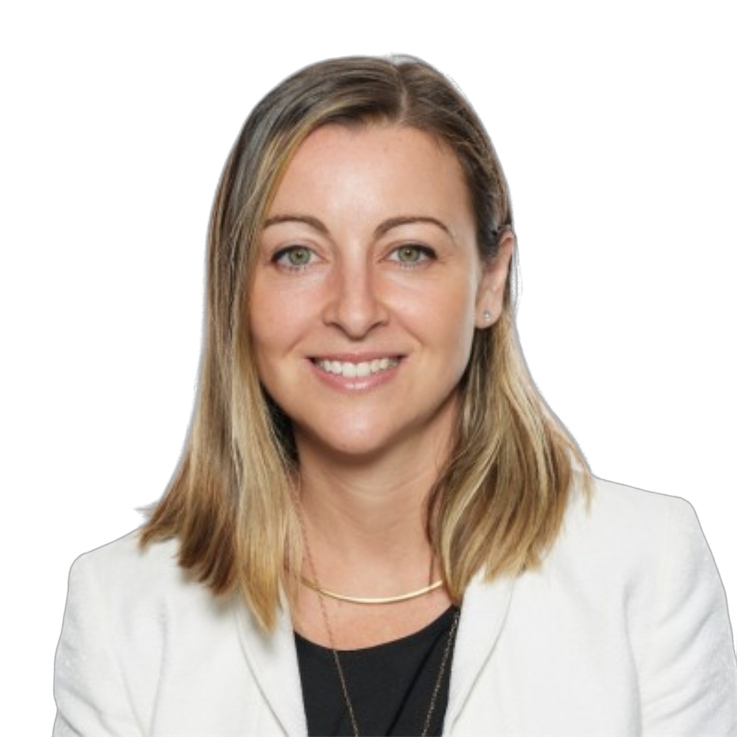

Fractional Expert Brisbane, Australia
Sophia - Transformation and Strategy Integrator
At Maestro, we know there’s more to life than work. In fact, it’s the experiences, relationships and pursuits we have outside of work that can often give us an edge in what we do each day. We host an interview series called “Meet the Maestro” where we interview our Maestros and get an insight to who they really are and what makes them tick - beyond the CV.
Sophia is the person you bring in when the strategy is clear on paper but making it happen is another story. She thrives in the messy middle of change and transformation, connecting the dots between people, processes, operations and technology to get everyone moving in the same direction. Naturally drawn to complexity, she has a knack for spotting the connections others miss, making sense of problems that are hard to pin down and bringing clarity to competing priorities. Her approach combines human insight with data-driven thinking, strong people leadership and a passion for building capability, so change isn’t just delivered but understood, embraced and sustained. Whether she’s navigating ambiguity, bringing stakeholders together or finding smarter ways of working, Sophia brings structure without losing sight of the people who make it all happen. For her, the real reward isn’t change for change’s sake, it’s seeing people and organisations find their rhythm and move forward together.
1. Tell us about a career highlight to date…
One that stands out is my time working in Go-to-Market at Optus, where I had the opportunity to see, and be involved in, almost every facet of what it takes to bring a product or proposition to market (full skeletons in the closet access).
What made the role particularly interesting was the sheer number of moving parts. It gave me an incredible appreciation for the complexity that sits behind what can look, from the outside, like a relatively straightforward launch. Product, marketing, digital, sales, customer experience, operational readiness and technology all needed to come together, and a decision made in one area could have a significant impact somewhere else. I loved having that whole-of-business view, being able to see how the individual pieces connected, where the friction or risks might emerge, and what needed to happen to keep everything moving.
For me, the highlight wasn't any single launch. It was the experience of navigating that level of complexity, often across multiple competing priorities, and bringing the right people, decisions and activities together to turn an idea into something that could actually work in market.
2. Talk us through an unusual career choice you’ve made along the way…
Probably moving away from traditional operational leadership and into transformation and change.
I'd spent years leading teams, driving commercial performance and building capability, and from the outside there was a fairly obvious leadership pathway ahead of me. But I became increasingly interested in the things happening behind the performance results. Why did certain strategies work in one environment and fail in another? Why could two teams, given the same tools and direction, produce completely different outcomes?
I realised I was more interested in understanding and improving the system than simply managing a part of it.
So I made a deliberate choice to move into roles that allowed me to work across functions and disciplines rather than continuing to move vertically through operational leadership. It wasn't necessarily the most conventional career progression, but it gave me the opportunity to bring together my commercial, operational and people experience in a completely different way.
Looking back, it makes perfect sense to me.
3. When you were little, what did you want to be when you grew up?
A National Park Ranger (think Ranger Stacey).
I've always been an avid nature and animal lover, so the idea of being able to combine the two, spend my days outdoors and contribute to conservation was pretty much my dream job growing up.
I think there's something pretty special about being able to protect and preserve things that can't necessarily advocate for themselves, and while my career took a very different direction, my love of animals, nature and conservation hasn't changed.
4. What are your passions outside of work and how do you make time for them?
Sport has always been a big part of my life. I've played netball for over 30 years, predominantly as a Goal Attack, and more recently I've started exploring long-distance running, which has been an interesting reminder that being good at one sport doesn't automatically translate into being good at another!
I love the challenge of learning something new, particularly when it pushes me outside my comfort zone.
Outside of that, I'm a mum of two boys, so there's a fairly constant balance between family life, sport, work and everything that comes with it. I make time for the things that matter to me, and while that sometimes means being deliberate about where my time and energy go, I've never really believed that having a full life means having to give up the things you love.
5. If you could instantly master any skill or hobby, what would it be and why?
I'd love to be able to instantly play every musical instrument!
There's something incredible about being able to pick up something that initially feels completely foreign and turn it into a way of expressing yourself. Music has this amazing ability to communicate things that words sometimes can't, and the idea of being able to create something that can be shared with others, or even just enjoyed by yourself, really appeals to me.
And why stop at one instrument? I'd love the freedom to pick up absolutely anything, understand its possibilities and create something with it. Each instrument has its own character, sound and way of expressing things, and being able to move between them effortlessly would open up an almost endless world of creativity.
6. What’s a personal value or belief that guides the way you live your life?
"We're not Paediatric Heart Surgeons- we’re not saving babies."
It was a comment made to me many years ago by an amazing leader, and it's stuck with me ever since. It's become something of a mantra, particularly when things start getting complicated, emotions are running high or a decision feels far bigger than it probably needs to be.
It's not about dismissing the importance of what we're doing, or the consequences of getting something wrong. It's about perspective. Very few of the decisions we make in our day-to-day lives are genuinely life or death, and remembering that has an incredible ability to take the emotion out of a situation and bring the focus back to what actually matters.
For me, it's a reminder that we can take our responsibilities seriously without taking ourselves too seriously. And sometimes, a little perspective is all you need to find a much clearer way forward.
7. What’s a challenge you’ve overcome outside of work that shaped you?
Being a mum to a neurodivergent child has probably challenged and shaped me in ways that nothing else could have.
It's taught me to take ego almost completely out of the equation, particularly when something isn't working the way its expected to.
It's also significantly expanded the way I see patterns, behaviours and possibilities. Rather than looking at a situation and asking why something isn't responding the way it should, I've learned to look more closely at what's happening around it, what might be contributing to it, and what other pathways might exist.
It's an ongoing learning experience, and I certainly don't get it right all the time, but it's taught me an enormous amount about patience, perspective and the importance of being willing to challenge assumptions.
8. What do you think your job will look like in 10 years time?
I think the tools available to us will be almost unrecognisable, but the fundamental challenges organisations face will be surprisingly familiar.
AI and automation will undoubtedly change how we analyse information, design solutions and execute transformation. I suspect much of the work that currently consumes our time will be handled very differently, giving us the opportunity to focus more on the things technology can't necessarily resolve on its own; things like judgement, understanding human behaviour, navigating competing priorities and making decisions in complex environments.
I'd like to think my role will be less about managing the mechanics of change and more about helping organisations make better decisions about what they're trying to achieve, why it matters and how everything needs to connect to make it possible.
9. If you could travel anywhere in the world tomorrow, where would you go and what would you do?
To the future!
I know that's probably not quite the answer you're looking for, but given the choice, why would I limit myself to somewhere that already exists as I know it?
I'd love to see what's possible, what we've managed to achieve as a society, which problems we've solved as humans and, inevitably, which new ones we've created along the way.
There's no point in going backwards when there are so many possibilities ahead of us. Although I’d also opt for a return ticket, just in case.
10. What does success look like to you?
My definition of success has changed quite a bit over the years.
Earlier in my career, it was much more closely connected to tangible achievements. Performance results, promotions, milestones and the next challenge. And while those things still matter, I've become far more interested in the impact I have along the way.
For me, success is being able to look at something I've been involved in and know that I've made it better. That people are more capable, that something which felt complicated now makes sense, or that I've helped create an opportunity that wasn't there before. I’ve often said I’m addicted to the “Ah! I get it!” face, when you can instantly recognise someone digesting information and making those connections.
I don't think success is necessarily a destination anymore. It's more about being comfortable with the direction you're heading and the way you're getting there, it's about having the freedom to make choices, being present for the people who matter to me, and continuing to do things that challenge me.
Meet More of Our Recent Maestros
Meet Matt from Melbourne, Australia
Meet Aaron from Queensland, Australia
Meet Saurav from Brisbane, Australia
Author
Related Articles
Empowering the workforce of the future.



Join the Future
Reimagine how fractional experts drive value for organisations
Discover how Maestro connects organisations with highly experienced experts and reimagines the future of work for talent.