

Fractional Expert Canberra, Australia
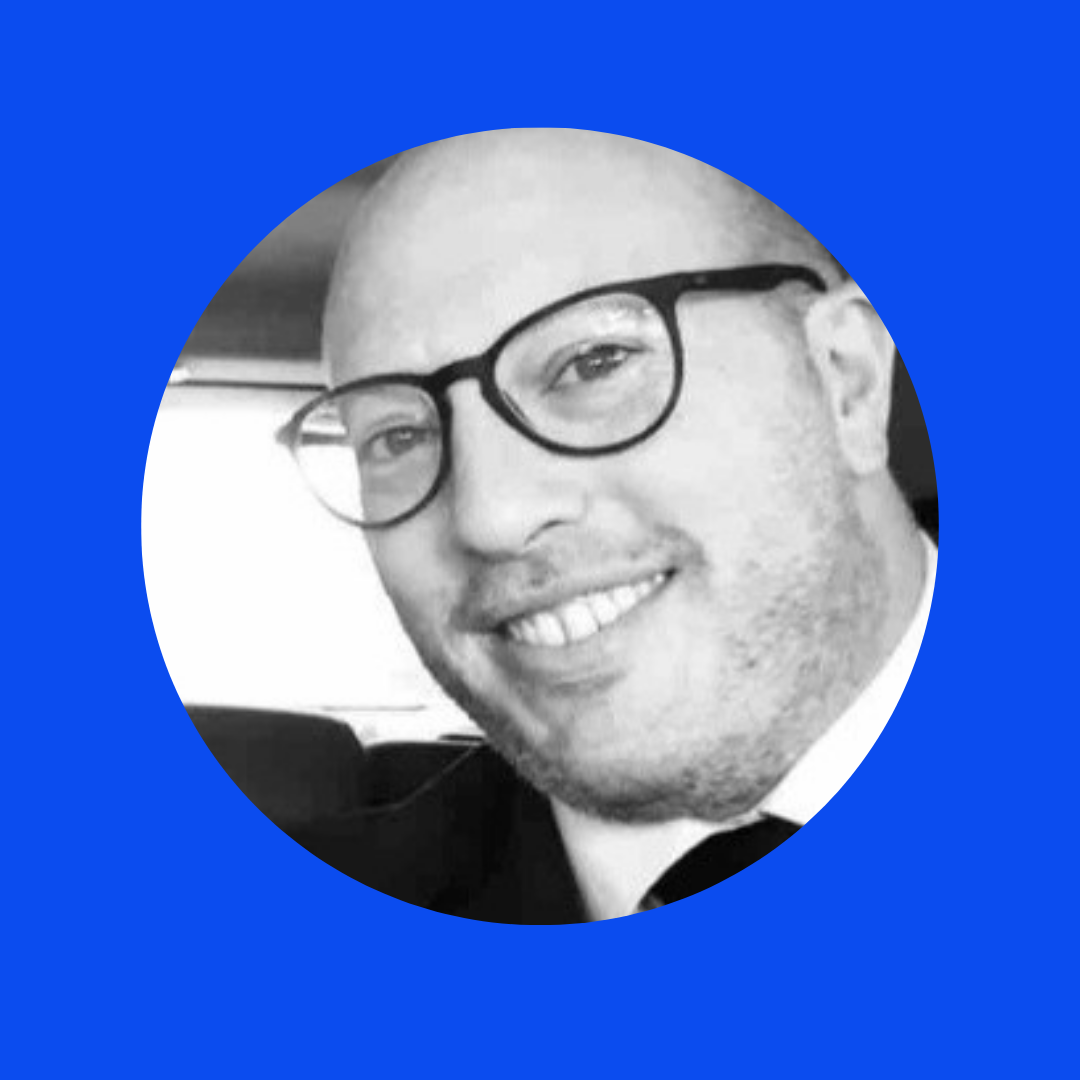
Michael - Director, Strategy & Transformation
At Maestro, we know there’s more to life than work. In fact, it’s the experiences, relationships and pursuits we have outside of work that can often give us an edge in what we do each day. We are kicking off an interview series called “Meet the Maestro” where we interview our Maestros and get an insight to who they really are and what makes them tick - beyond the CV.
For more than 20 years, Michael has been the person organisations call when they know they can be better but aren’t sure how to get there. With experience spanning everything from aerospace and defence to utilities, FMCG, construction and even coffee machines, he has a unique ability to walk into any environment, quickly pinpoint what’s holding it back, and design practical, high-impact transformation that lifts performance and capability. He’s worked with Boards, Executives and frontline teams alike, delivering new operating models, clearer strategies, smarter processes and more than $500m in benefits along the way. Backed by an MBA, a Master of Project Management and a Lean Six Sigma Master Black Belt, Michael’s real superpower is his knack for cutting through complexity and unlocking the shifts that help organisations move forward with confidence.
1. Tell us about a career highlight to date…
A significant career highlight has been designing and delivering my first whole of organisation transformation. This was a clean sheet approach for the organisation as it required defining the business capability landscape (for the first time), the business architecture (for the first time), the future state operating model and the high-level organisational design. The process established the maturity levels for the organisational capabilities as well as what new capabilities were required to deliver the new strategic direction. It was a program where the organisation and its executive team had to fully reflect on the organisation and where they were starting from on a customer centric journey.
2. Talk us through an unusual career choice you’ve made along the way…
In 2004 I started moving away from my then profession (commenced work in the photographic industry in 1979) and was now working in corporate Australia. Between late 2007 and 2009 I had reinvented my career path which included an MBA and Master of Project Management as well as certification as a Lean Six Sigma Black Belt. This was driven by specific circumstances, my father’s passing, and that I could see the fundamental changes digital photography would make to the professional photographic industry in Australia.
3. When you were little, what did you want to be when you grew up?
I actually do not recall but probably something along the lines of an entomologist or naturalist (think David Attenbrough). This morphed into a love of photography during high school and my early career.
4. What are your passions outside of work and how do you make time for them?
Family, I always make time for family. Food plays a big part in giving to my family as well as the enjoyment it brings. I still like Photography, and have always been a fisherman since childhood – the last 2 are harder to make time for as work is still an integral part of life.
5. If you could instantly master any skill or hobby, what would it be and why?
Japanese woodwork and joinery. This is because of the precision and inherent skills required to achieve the outcomes, and the time it will take to get past just doing the basics. It is work done by only hand with simple tools (nothing powered) and time. I recently made a top for a vanity unit using multiple woods the need to be joined and finished which took a couple of weeks.
6. What’s a personal value or belief that guides the way you live your life?
Family comes first always. Integrity in how I operate and the advice I give is critical. This is built from the fact that all people are treated equally, no matter whether they are a CEO or a frontline worker. They all should receive the same courtesy and respect due a fellow human being. My integrity is also built on what I know, and my willingness to say I don’t know. No one knows everything, and I have lived by the adage: I know what I know, and there are millions of things I don’t know…I just don’t know what they are…yet. The key is; if you do not know the answer at first, you go and find it.
7. What’s a challenge you’ve overcome outside of work that shaped you?
The death of my father in 2004, after taking my mother to hospital to visit her husband (and my father) for nine months, I did not have the energy to rebuild my business as I had spent that time saying no to clients. These things, and the changing landscape of my then industry contributed to me reshaping my career.
8. What do you think your job will look like in 10 years time?
Similar to today, but hopefully I am able to choose what I take on which will allow me to spend quality time with my wife and my extended family. Hopefully, in 10 years I will be able to simplify my work life and better prioritise the really important things in life.
9. If you could travel anywhere in the world tomorrow, where would you go and what would you do?
Although I have been to the UK, as well as parts of Europe, Asia, North and South America, there are still too many places I have yet to explore. There are places I would go back to, but I would probably focus on places I haven’t been too such as South Korea, India, Peru and central Europe. No matter the destination, key is understanding the culture. One of the simplest ways is through their food, not the fancy world of restaurants, but through the local café, hawker centre, or even the market or roadside stall. The other is through their music. As an example, Fado is one of the best ways to understand the Portuguese, their struggles and the outlook on life.
10. What does success look like to you?
I’m comfortable, I have work, income and time to spend the income. That my family are safe and happy and achieving what they want to do. That does not preclude that my clients and the people I am working with are satisfied with the work I deliver. That is a key success factor, being able to deliver and embed the necessary change.
Author
Related Articles
Empowering the workforce of the future.



Join the Future
Unlock Your Potential
Discover how Maestro connects you with opportunities that match your skills and aspirations.